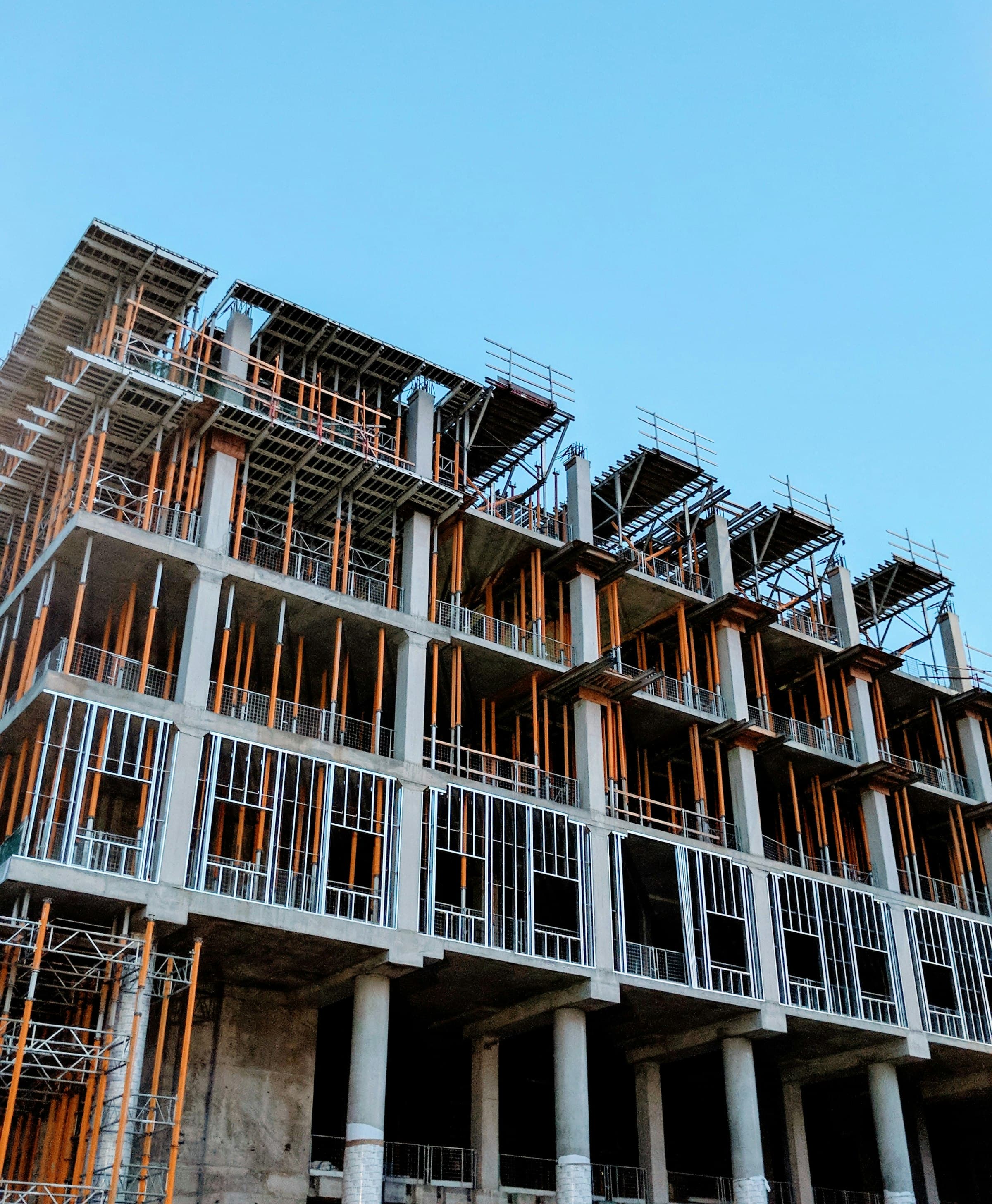

The Engineering Reality of Seismicity in Turkey
Turkey's Building Earthquake Code sets out a performance-based design framework grounded in the country's national seismic hazard maps. Ankara doesn't sit in the highest-risk zone, but the code's minimum life-safety level is not, on its own, a sufficient target for every building type.
As a team that has built in this city for 23 years, we treat the code's minimum as a starting point, not a ceiling.
The Gap Between Code-Minimum and a Performance Target
The code's life-safety performance level guarantees that a building won't collapse in a major earthquake and that occupants can evacuate — not that the building remains usable afterward. For high-occupancy office towers, healthcare facilities, or projects intended for long operational life, we build a higher performance objective into the design brief: continued occupancy, or continued use with only limited damage, after a design-level event.
From Soil Investigation to Damping Systems
Every project begins with a site-specific seismic hazard assessment: soil amplification effects, soil-structure interaction, and local fault data all shape the design response spectrum. On critical or long-span structures, we go beyond ductile detailing alone and evaluate supplementary protection systems such as seismic isolators or viscous dampers.
These systems redirect a portion of earthquake energy away from structural members and into controlled mechanisms, reducing both structural damage and the accelerations that affect people and equipment inside the building.
Why It Matters
Seismic engineering isn't a calculation performed to satisfy a sign-off form — it's the long-term safety of occupants and of the investment itself. As an Ankara-based firm, we carry that responsibility above code-minimum on every structural project we sign.